Global Population
Less than 60 individuals

༄༅། ། རྒྱལ་འཛིན་རང་བཞིན་སྲུང་སྐྱོབ་ཚོགས་སྡེ།
Inspiring personal responsibility for environmental conservation since 1987
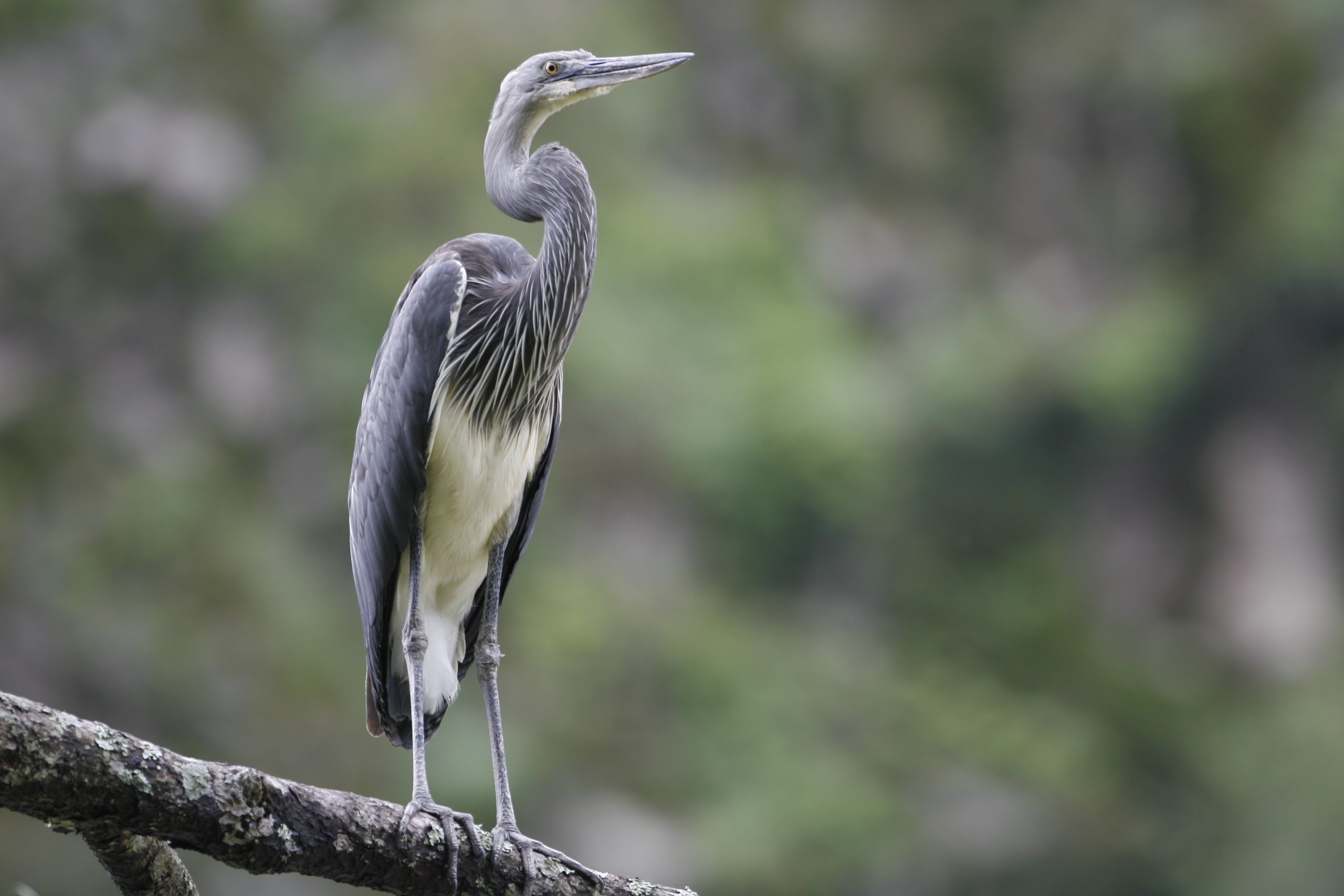
Scientific Name: Ardea insignis
Common Name: Pho Bap (Dzongkha)
Less than 60 individuals
Fish, frogs, crustaceans and other aquatic prey
Undisturbed riverine and wetland habitats in subtropical and temperate forests
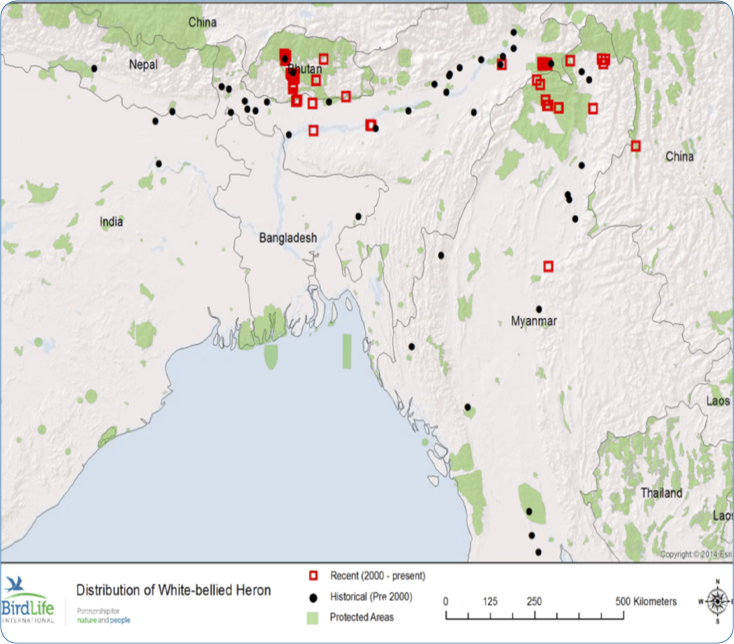
Bhutan, northeast India, and possibly Myanmar
339,000 km²
Resident / partially migratory
Yes (Bhutan)
4
The White-bellied Heron (Ardea insignis), also known as the Imperial Heron, is one of the rarest and most critically endangered herons in the world. With a global population estimated at fewer than 60 individuals, it stands on the brink of extinction. Bhutan harbours one of the last viable populations of this species, making the country's conservation efforts crucial for its survival.
Standing nearly a metre tall, the White-bellied Heron is a large, grey heron distinguished by its white underparts, streaked neck, and stately posture. It inhabits undisturbed, pristine river systems and wetland habitats in the subtropical and temperate forests of the eastern Himalayas.
RSPN has been monitoring and conserving the White-bellied Heron in Bhutan since 2009, conducting annual population surveys, habitat assessments, and community awareness programmes across known heron habitats in the country.
Bhutan is home to 45% of global WBH population.
There is less than five known actively breeding WBH pairs in the world.
WBH is found in Bhutan, India and Mynmar - endemic to Himalayan foothills.
First WBH nest in Bhutan was discovered in 2003 - it was also rediscovery for the world after more than seven decades of previous record.
Fewer than 60 WBH are left in the world.
WBH is World’s Rarest Heron - Guinness Book of World Records, 2013.
The White-bellied Heron (Ardea insignis Hume, 1878) belongs to the family Ardeidae, order Pelecaniformes, and is found in freshwater ecosystems of the Himalayas. The species had a rather chequered nomenclatural history, having been linked with the specific names fusca, insignis and nobilis (Blyth 1844, Gray 1844, Gray and Gray 1846, Stray Feathers 6 [1878]: 470–472) as well as imperialis. Although insignis gained general acceptance, E. C. S. Baker (Bull. Brit. Orn. Club 49 [1928]: 40) later argued that its use was invalid (a nomen nudum) and renamed the species Ardea imperialis. However, it was later described by A. O. Hume in 1878 (Stray Feathers 6:470) as Ardea insignis (Sibley & Monroe 1990) and the accepted name now is Ardea insignis, the White-bellied Heron.
The White-bellied Heron (WBH) is a large water bird with long neck and leg, found along the open banks of freshwater river systems in the inner Himalayas. Its body is dark greyish with contrasting white throat, belly and vent, and white-streaked scapulars, fore neck and upper breast. Both males and females have two lace-like white plumes on the nape. During breeding seasons, plumage turns light grey with a whitish neck and crest. Juveniles appear darker than adults with more streaked on the neck, browner-tinged vent and smaller plume. It has a long and sharply pointed black bill with a serrated inside. The chin and lower mandible are whitish undersides while the upper mandible is black.

| English | Dzongkha | Lhotshamkha | Khengkha | Tshangla | Kurtoep/Dzalakha |
|---|---|---|---|---|---|
| White-bellied Heron | Chubja Phowkarp/Bja Eako Raem | Saray Haas, Raja Haas | Woong Rila | Ngangkha | Ngäp Bja |
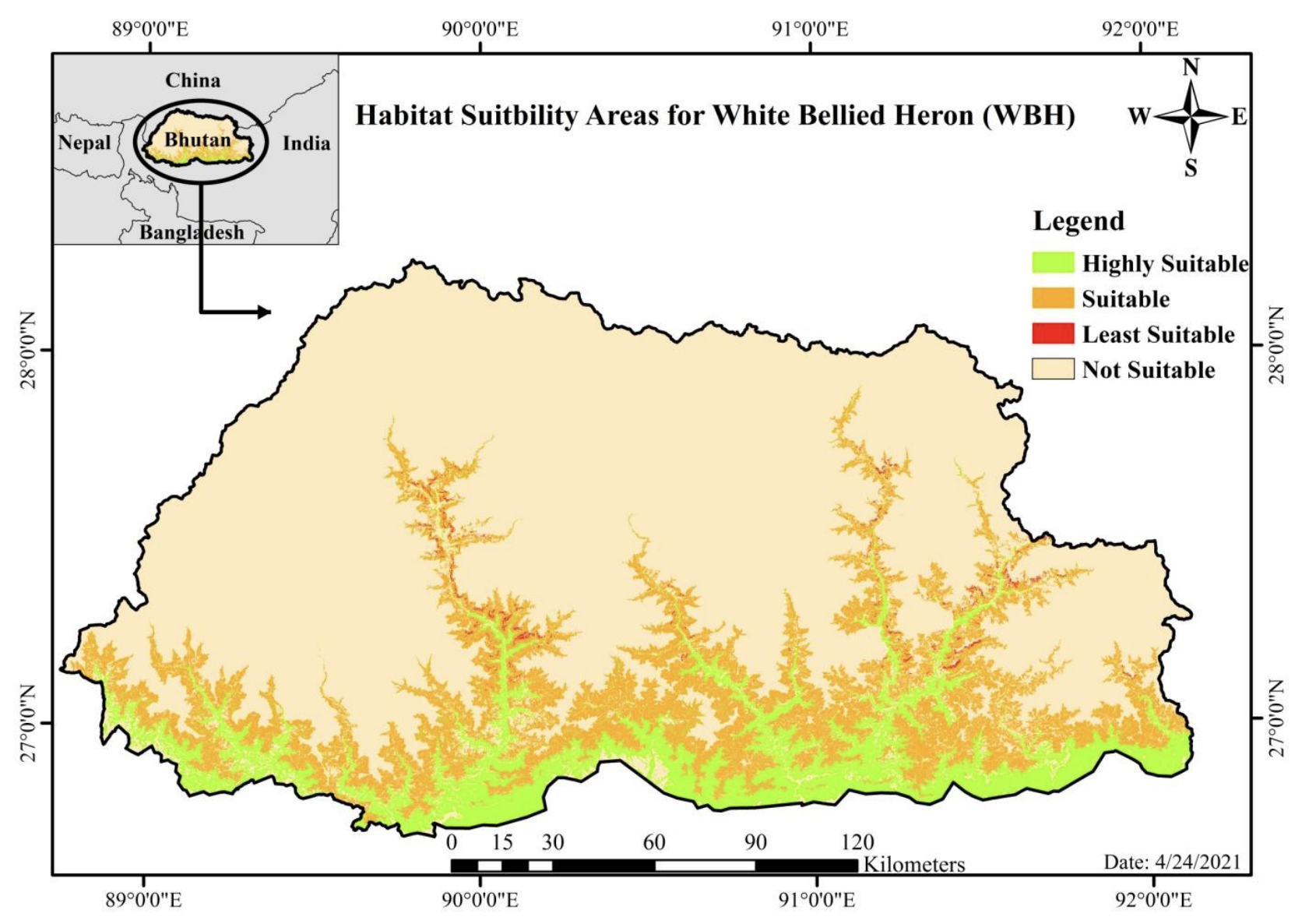
Riparian forest loss, agriculture, and settlement along riverbanks reduce critical nesting, roosting, and foraging habitat corridors.
Dams and associated infrastructure alter river flow, affect fish availability, and physically disturb breeding and feeding sites.
Fishing, extraction, increased human presence, changing rainfall, and extreme floods can trigger nest abandonment and breeding failure.
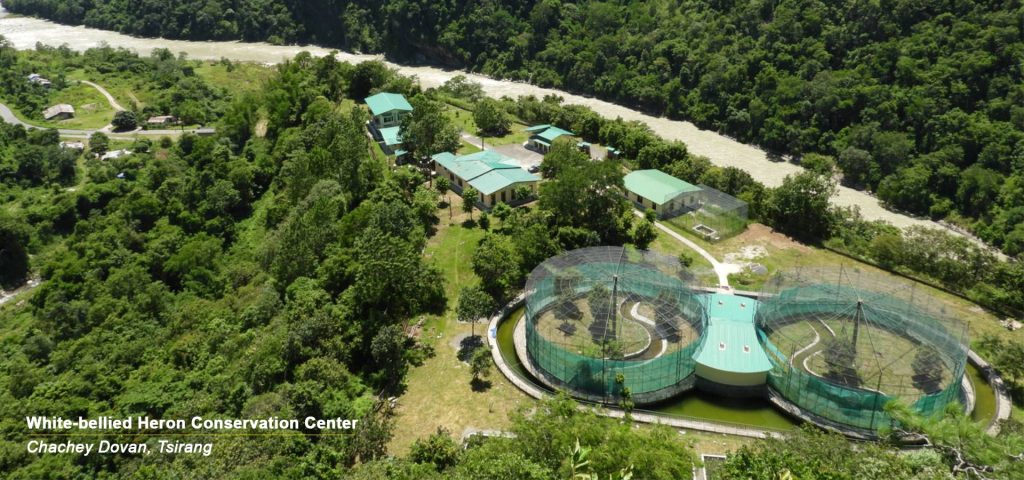
In Bhutan, RSPN’s engagement in the study and conservation of WBH started from the year 2003. In the same year, the first active nest was sighted at Zawa in Wangdue Phodrang district by a local resident. Since then, consistent research and surveys of nesting sites, feeding, threats, distribution, movement and habitat needs have been conducted along with documentation of socio-cultural information. Besides research, RSPN has also been making some major efforts to recover the WBH population through a captive breeding program. In 2011, RSPN in collaboration with San Diego Zoo undertook the first-ever captive rearing of WBH with eggs collected from wild nests. The team managed to artificially incubate and rear the chick in the lab for the first time. In 2021, the first captive breeding, the WBH Conservation Center was established and started to operate at Changchey Dovan, Tsirang.
To further enhance the species knowledge, RSPN in collaboration with academic institutions in the country has been conducting numerous studies on the behaviour, diet, habitat preferences, and threats to WBH in the country.
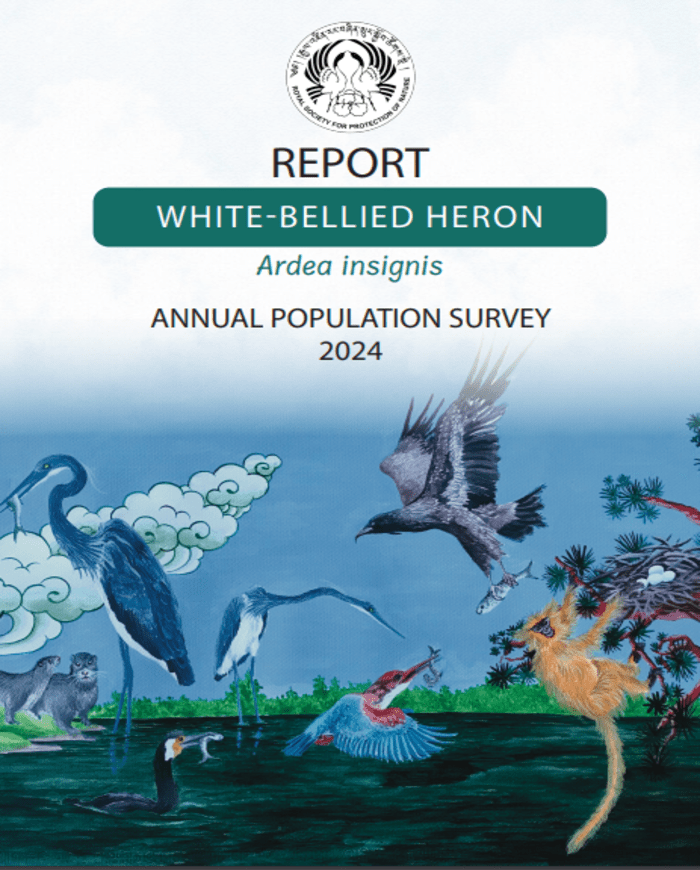

With only 31 White-bellied Herons recorded in Bhutan in 2026, every survey, every nest, and every conservation decision counts. RSPN held a three-day White-bellied…
Read more
“Observed, count, degraded, threats, sunny, normal winter, annual income….” and so on…the data entries are being made. Our surveyors from the Department of Forest…
Read more
As part of a major initiative to strengthen scientific research and conservation efforts for the critically endangered White-bellied Heron and other avian species in…
Read more
On the auspicious occasion of the Birth Anniversary of His Majesty the Third Druk Gyalpo, the Royal Society for Protection of Nature (RSPN Bhutan)…
Read more
The community forest in Laja Gewog under Dagana district associates their name to their holy site of Guru Rinpoche that resembles the frontier sky…
Read more
On 24th August, RSPN hosted teachers and students from Gaselo Higher Secondary School to share the conservation program on White-bellied Heron (WBH). The program,…
Read more
Towards enhancing the conservation effort of the White-bellied Heron(WBH) among the distribution range countries, staff of the Royal Society for Protection of Nature (RSPN)…
Read more
𝗣𝗿𝗼𝗷𝗲𝗰𝘁 𝗦𝗰𝗼𝗽𝗶𝗻𝗴 𝗠𝗶𝘀𝘀𝗶𝗼𝗻 𝗶𝗻 𝗪𝗵𝗶𝘁𝗲-𝗯𝗲𝗹𝗹𝗶𝗲𝗱 𝗛𝗲𝗿𝗼𝗻 𝗹𝗮𝗻𝗱𝘀𝗰𝗮𝗽𝗲. RSPN Bhutan in partnership with supporters from Japan and the Athang Institute, is currently conducting a comprehensive project scoping study…
Read more
An annual population survey of White-bellied Heron(WBH) this year observed the presence of 𝟮𝟱 individuals of WBH in Bhutan, including three herons that are…
Read more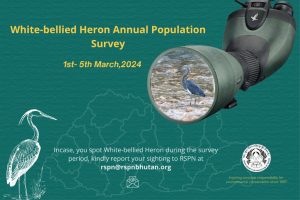
In an effort to monitor and conserve the Critically Endangered #WhitebelliedHeron (Ardea insignis), RSPN Bhutan in collaboration with Department of Forests and Park Services…
Read more
We are delighted to receive two gentlemen from Thimphu City FC (TCFC), Mr. Hishey Tshering and Mr. Orgyen Wangchuk Tshering, with a gift from…
Read more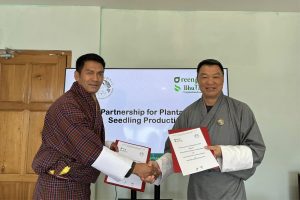
RSPN has been implementing projects related to climate change, conservation, and livelihood that have several components on plantation activity. To enhance the impact of…
Read more
Fostering Regional Partnership for saving critically endangered White-bellied Heron from extinction With an objective to foster Regional Conservation Partnership between India and Bhutan towards the conservation…
Read more
RSPN and Punatsangchhu-I Hydroelectric Project Authority (PHPA-I) signed a joint agreement in restoring some of the degraded areas within the project landscape that is…
Read more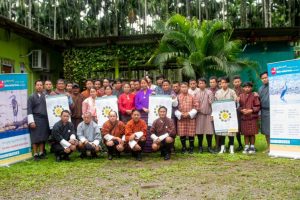
Capacity Building Workshop for Local Conservation Support Group(LCSG) The formation of Local Conservation Support Groups (LCSG) along the White-bellied Heron landscape is part of…
Read more
314 participants including students were educated on the White-bellied heron (#WBH) and its conservation to the communities residing in the lower Wangchu basin under…
Read more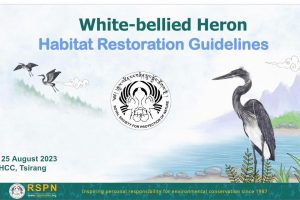
Consultation on development of habitat restoration guideline for White-bellied Heron The degradation of habitats or ecosystems will not only impact the survival of White-bellied…
Read more
RSPN is one of the implementing partners of the current Green Climate Fund Readiness and Preparatory Support Programmer for Bhutan, “Bhutan the Capacity of…
Read more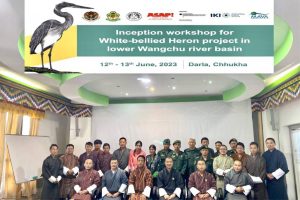
In the realm of conservation efforts, it is widely recognized that successful conservation initiatives must include the active participation and engagement of local communities…
Read more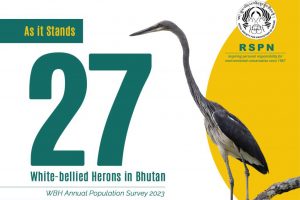
As it Stands: A total of 27 White-bellied Herons (WBH), including three juveniles recorded during the WBH Annual Population Survey, conducted from March 1-5,…
Read more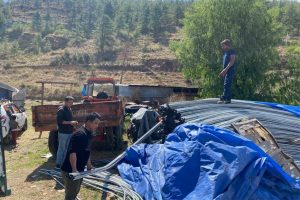
The ongoing BMUV-IKI project ‘𝗗𝗲𝘃𝗲𝗹𝗼𝗽𝗶𝗻𝗴 𝗘𝗰𝗼𝘀𝘆𝘀𝘁𝗲𝗺-𝗯𝗮𝘀𝗲𝗱 𝗦𝗼𝗹𝘂𝘁𝗶𝗼𝗻𝘀 𝗳𝗼𝗿 𝗠𝗮𝗻𝗮𝗴𝗶𝗻𝗴 𝗕𝗶𝗼𝗱𝗶𝘃𝗲𝗿𝘀𝗶𝘁𝘆 𝗟𝗮𝗻𝗱𝘀𝗰𝗮𝗽𝗲𝘀 𝗶𝗻 𝗕𝗵𝘂𝘁𝗮𝗻”, the RSPN team along with technical support from respective gewog agricultural…
Read more
Aiming to restore 50 hectares of degraded forest in the White-bellied Heron Landscape, the ongoing BMUV-IKI initiative involves planting 12.5 hectares of land each…
Read more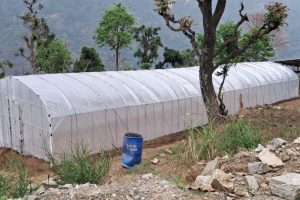
From the ongoing BMUV-IKI project, the RSPN team along with technical support from respective gewog agricultural extension officers has successfully distributed and installed 30…
Read more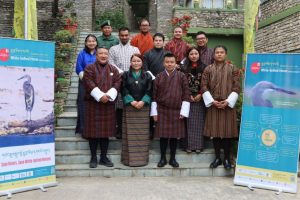
The Second PSC meeting for the on-going BMUV-IKI project ‘Developing Ecosystem-based Solutions for Managing Biodiversity Landscapes in Bhutan’ was successfully conducted on 30th December…
Read more
From the several species at risk in Bhutan, the critically endangered White-bellied Heron (WBH), a bird closely associated with the Himalayan freshwater river system,…
Read more
Opening the curtains of young minds can later do wonders for the conservation of #Critically#Endangered bird White-bellied Heron(WBH). Today, an awareness program was conducted…
Read more
As part of the on-going BMU-IKI project “Developing Ecosystem-based Solutions for Managing Biodiversity Landscapes in Bhutan”, RSPN in collaboration with the Department of Forests…
Read more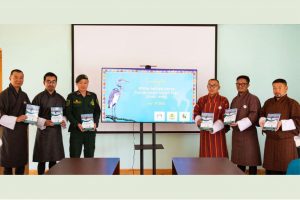
The White-bellied Heron (WBH) Conservation Action Plan was launched today, in the presence of our conservation friends Department of Forests and Park Services Bhutan…
Read moreYou can now be apart of our conservation initiatives and make a difference!