༄༅། ། རྒྱལ་འཛིན་རང་བཞིན་སྲུང་སྐྱོབ་ཚོགས་སྡེ།
Royal Society For Protection of Nature
Inspiring personal responsibility for environmental conservation since 1987
༄༅། ། རྒྱལ་འཛིན་རང་བཞིན་སྲུང་སྐྱོབ་ཚོགས་སྡེ།
Inspiring personal responsibility for environmental conservation since 1987
“Why are these birds important?”
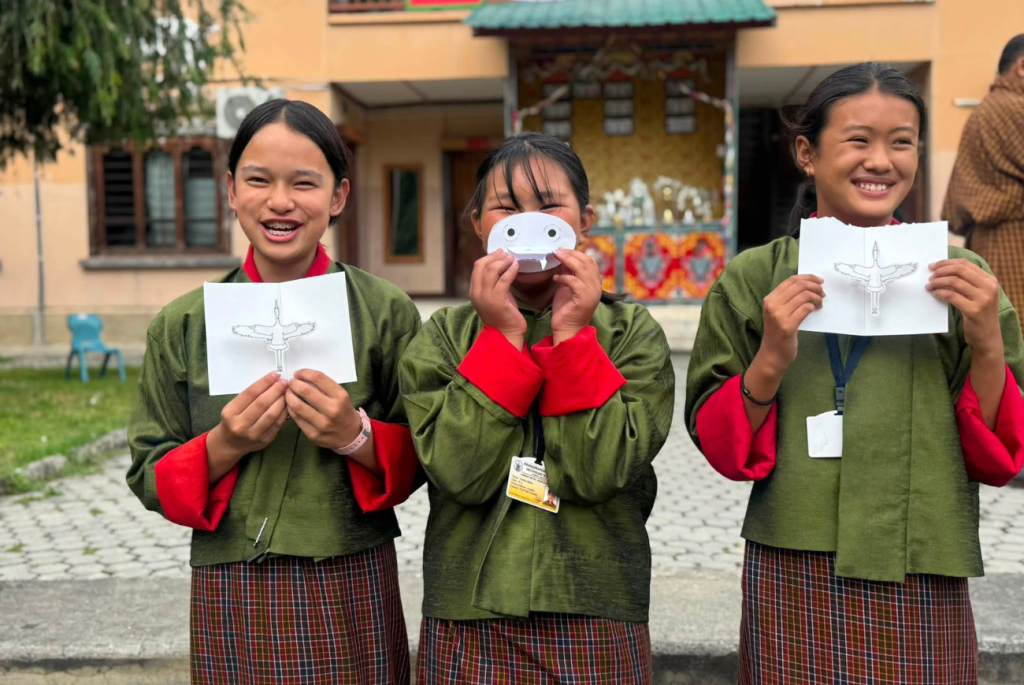
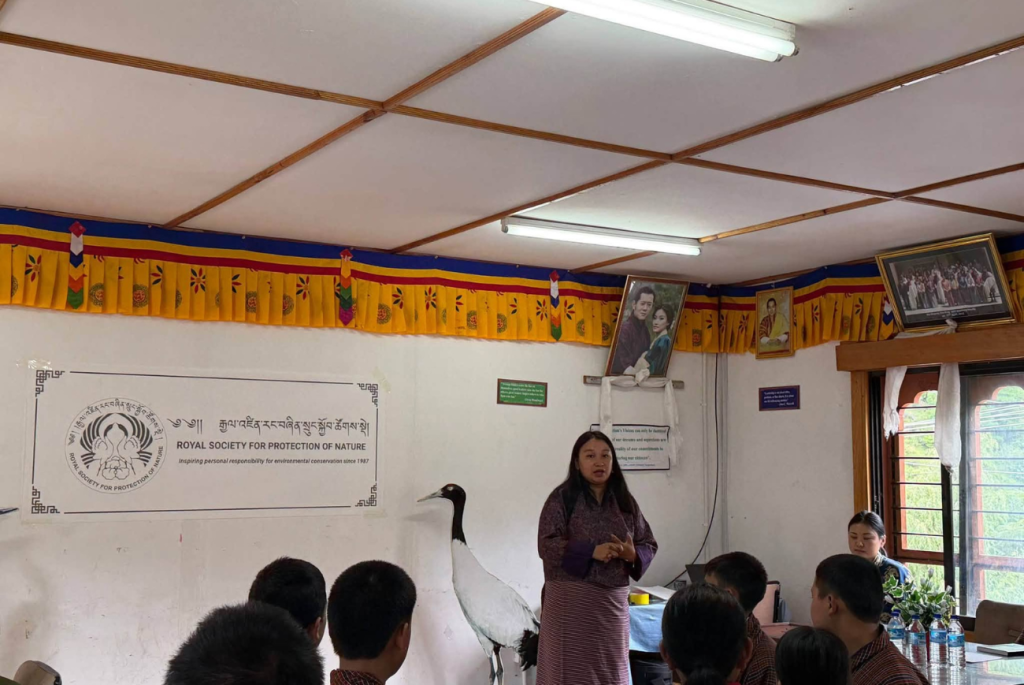
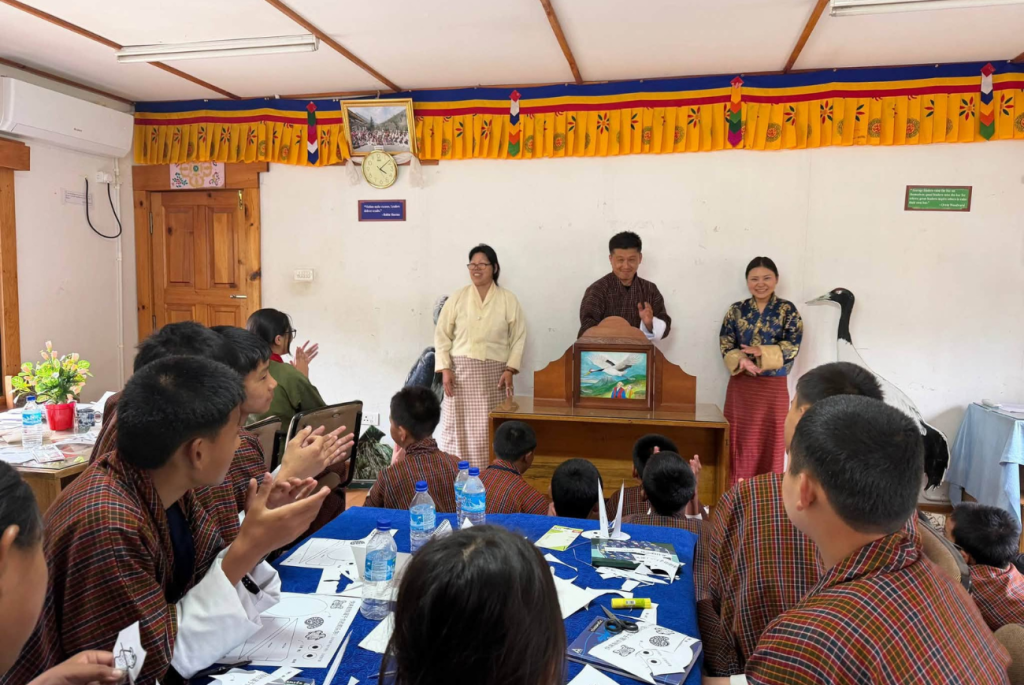
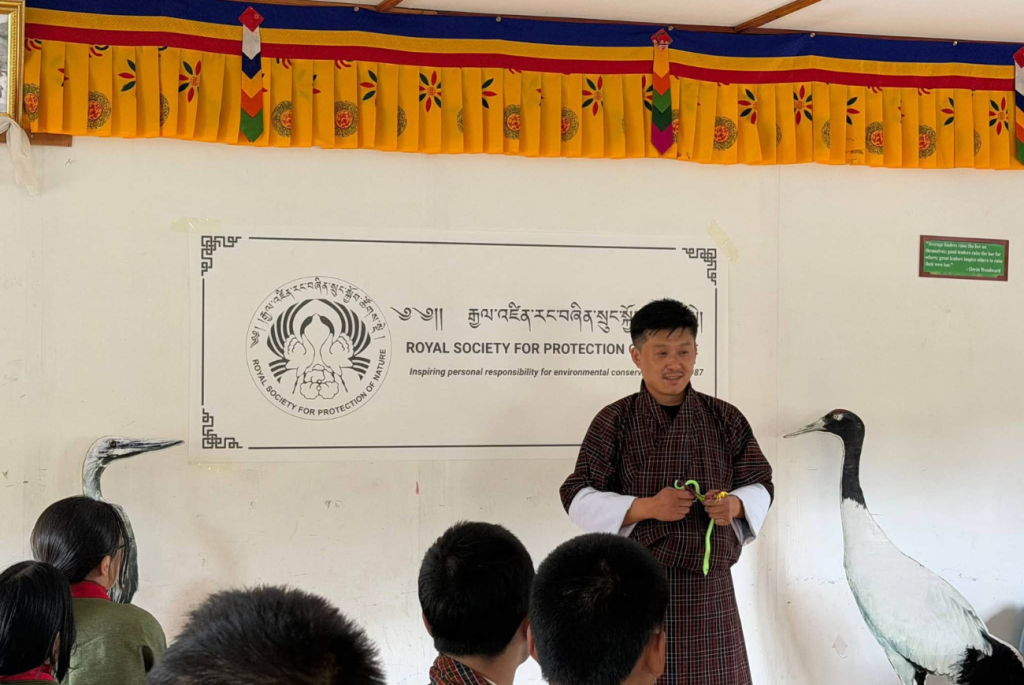
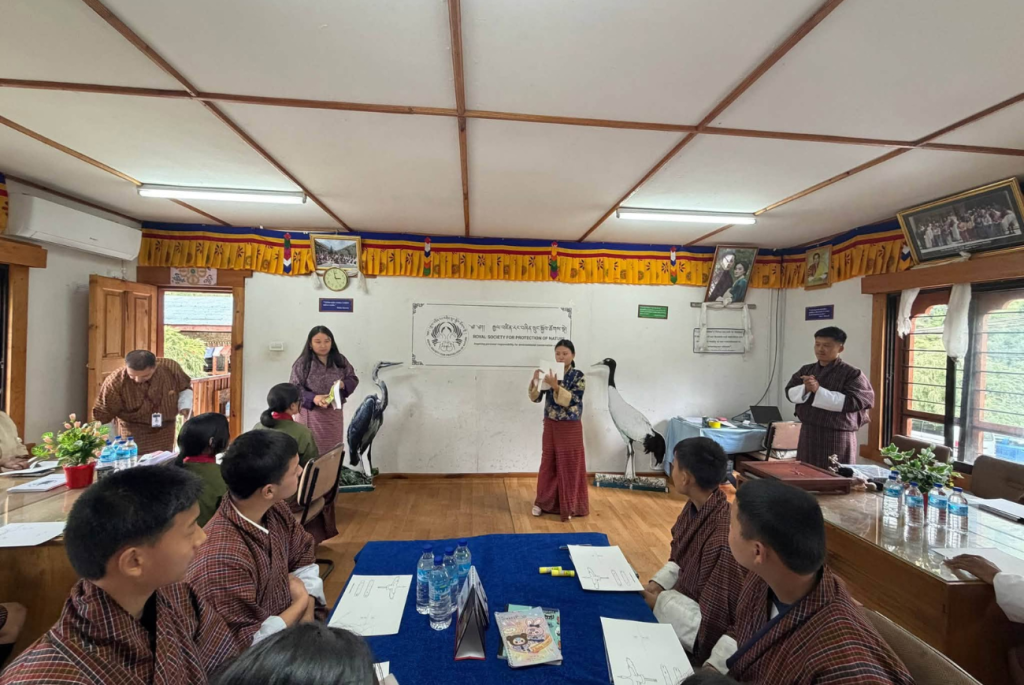
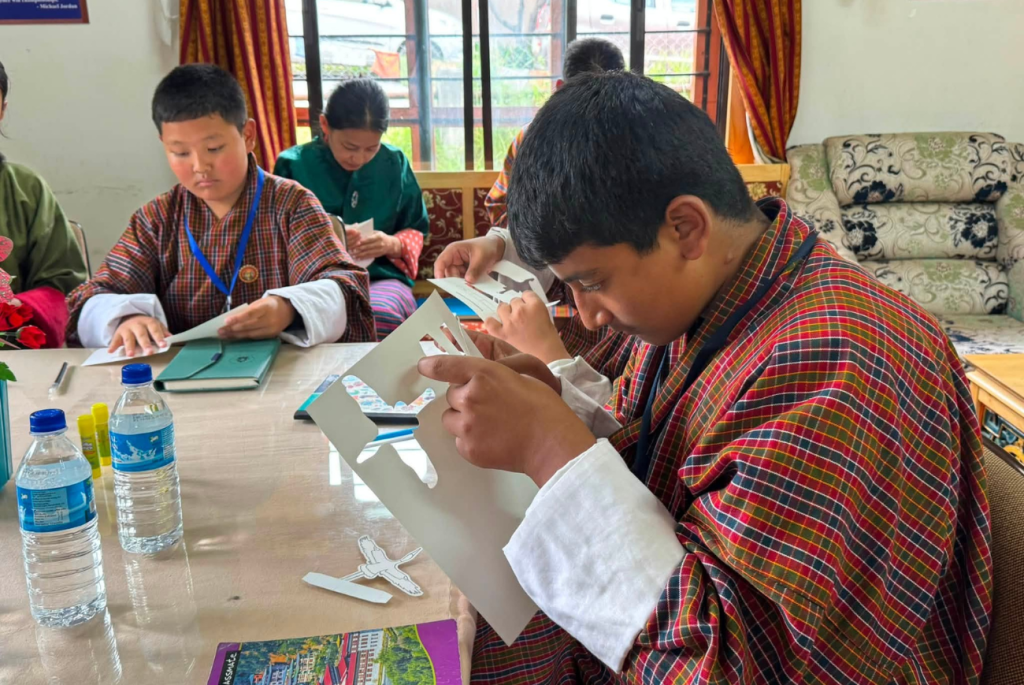
That was one of the many questions that sparked curiosity among the young Nature Club members of Khasadrapchu Middle Secondary School during a session under RSPN’s Environmental Education programme.
Do birds stop growing? How tall can they get? Why do cranes migrate? How long do birds live? And why are these birds important?
The questions came fast, curious, and unfiltered, the kind that only young minds encountering something new can ask. From these simple starting points, the conversation grew into a broader exploration of two of Bhutan’s most treasured flagship species: the Black-necked Crane and the White-bellied Heron.
The Black-necked Crane, revered in Bhutanese culture as a sacred and heavenly bird, migrates each winter from the high plateaus of Central Asia to wetland valleys such as Phobjikha, Bumdeling, and Bumthang. Its arrival each October is not only an ecological event but a cultural one, celebrated annually at the Black-necked Crane Festival, where communities welcome the birds as messengers of good fortune.
The White-bellied Heron, by contrast, is one of the rarest birds in the world, found only in a handful of river systems across Bhutan and neighbouring countries. Its presence depends almost entirely on undisturbed rivers and healthy riparian forest making it a powerful indicator of the state of Bhutan’s freshwater ecosystems.
Together, these two species tell a larger story: when Bhutan’s wetlands and rivers are healthy, both birds thrive and so do the communities and ecosystems that depend on the same water and land.
For RSPN, Environmental Education is more than sharing information. It is about nurturing curiosity, encouraging young voices, and creating opportunities for the next generation to become active participants in conservation, not just observers of it.
This approach is delivered largely through Bhutan’s nationwide network of school-based Nature Clubs, established by RSPN in early 1990s. Active in schools across the country, Nature Clubs give students a structured, hands-on way to engage with the environment around them through field sessions, activities, and open-ended conversations like the one held at Khasadrapchu Middle Secondary School.
Through Nature Clubs, RSPN continues to expand Environmental Education nationwide, equipping young people with the knowledge and curiosity to know, value, and protect Bhutan’s rich biodiversity from its high-altitude wetlands to its lowland river systems.
Because sometimes, one question is all it takes to start a conservation journey.
A student’s simple curiosity about how tall a bird can grow, or why it flies thousands of kilometers each year, can be the first spark of a lifelong connection to nature, one that grows, over time, into stewardship, advocacy, and action.
RSPN extends heartfelt gratitude to the School Administration of Khasadrapchu Middle Secondary School and the Nature Club coordinators for their valuable support in making this programme possible.