༄༅། ། རྒྱལ་འཛིན་རང་བཞིན་སྲུང་སྐྱོབ་ཚོགས་སྡེ།
Royal Society For Protection of Nature
Inspiring personal responsibility for environmental conservation since 1987
༄༅། ། རྒྱལ་འཛིན་རང་བཞིན་སྲུང་སྐྱོབ་ཚོགས་སྡེ།
Inspiring personal responsibility for environmental conservation since 1987
In the river valleys of eastern Bhutan, one of the world’s rarest birds is slowly reappearing. Each sighting of the White-bellied Heron (WBH) is a small but significant sign of hope for a species that remains Critically Endangered, with only 31 individuals recorded in Bhutan during the 2026 White-bellied Heron Annual Population Survey.
Bhutan is home to more than half of the world’s remaining White-bellied Herons, making the country a critical stronghold for the survival of this Critically Endangered species. Protecting the heron depends on healthy rivers, and healthy rivers depend on the communities who live alongside them.
In the Kurichu River Basin, rivers are not only important habitats for the White-bellied Heron and other wildlife; they are also central to the lives and livelihoods of local communities. Protecting the heron therefore means protecting the ecosystems that sustain both people and nature.
With financial support from the Keidanren Nature Conservation Fund (KNCF), Japan, RSPN is implementing the project “Conservation of the Critically Endangered White-bellied Heron (WBH) in the Kurichu River Basin” in Lhuentse and Mongar Dzongkhags.
The project aims to assess the conservation status of White-bellied Heron habitats while promoting integrated nature-based solutions, nature-based conservation interventions, climate-smart livelihoods and livelihood diversification to strengthen the resilience of local communities to climate change.
The project also seeks to strengthen the knowledge base, policy interface, and community- and ecosystem-based adaptation (EbA) approaches necessary for the long-term conservation of the White-bellied Heron.
During the first year of the project, RSPN teams worked closely with local forest officials and communities to survey the Kurichu and Drangme Chhu. The surveys focused on mapping the distribution of the White-bellied Heron and its associated species (Otter and Pallas’s Fish Eagle), while documenting their feeding, roosting and nesting sites. The surveys also helped identify key threats to these species and their habitats, including development activities and illegal fishing.
Alongside the ecological surveys, a socio-economic assessment was conducted to understand how local families depend on forests, rivers and agricultural land for their livelihoods, as well as how changing climatic conditions are affecting their lives and livelihoods. These findings provide an important foundation for designing conservation and livelihood interventions that are relevant to local needs and the realities of the landscape.
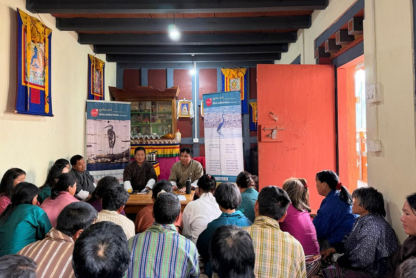
Building on these findings, the RSPN team recently visited project sites and conducted consultative meetings with communities and Gewog officials in Dromoshong Chiwog, Menbi Gewog, Lhuentse, and Wangmarkhar Chiwog, Chhaling Gewog, Mongar.
The consultations focused on identifying potential climate-smart villages and communities where livelihood activities can be implemented as part of the project.
Discussions explored opportunities for group farming and agriculture- and forest-based enterprises, including the potential to undertake commercial agricultural activities. These initiatives are intended to support sustainable livelihoods, diversify household income sources and strengthen community resilience to the impacts of a changing climate, while also helping reduce pressure on the river ecosystems that the White-bellied Heron depends on.
The consultations also provided an opportunity for communities and local authorities to discuss their priorities, identify potential livelihood opportunities and explore ways in which conservation and livelihood development can be pursued together.
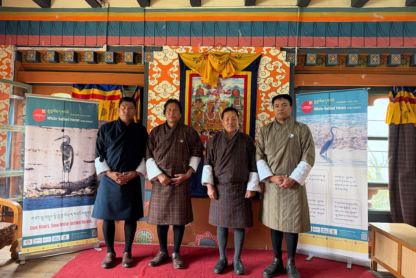
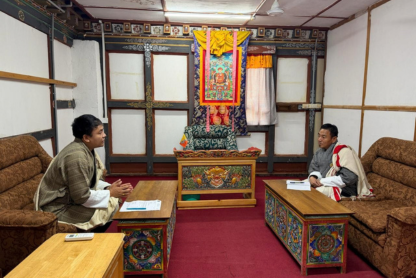
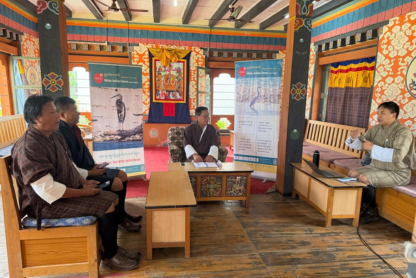
As part of the field engagement, the RSPN team also paid courtesy calls to the Dasho Dzongdags of Lhuentse and Mongar to share updates on the project’s progress, key activities and planned interventions in the Kurichu River Basin.
These engagements provided an important platform to strengthen coordination and foster collaboration with local authorities in support of the project’s conservation and livelihood objectives. Continued engagement with Dzongkhag administrations, Gewog officials, local communities and relevant stakeholders will be essential for ensuring that conservation interventions are locally relevant and contribute to long-term outcomes.
The future of the White-bellied Heron is closely connected to the health of the rivers and landscapes it depends on. At the same time, the well-being of communities in the Kurichu River Basin is closely linked to the same natural resources.
Through partnerships with local communities and relevant stakeholders, RSPN is promoting an integrated approach that connects biodiversity conservation, climate adaptation and sustainable livelihoods.
The approach recognises that conservation and community well-being cannot be addressed separately. By strengthening livelihoods, supporting climate resilience and promoting responsible stewardship of river ecosystems, the project seeks to contribute to a future where both people and the White-bellied Heron can flourish in the Kurichu River Basin.
Healthy rivers support healthy communities, and healthy communities can help keep rivers alive. For the White-bellied Heron, every sighting matters and so does every effort to protect these shared landscapes.