༄༅། ། རྒྱལ་འཛིན་རང་བཞིན་སྲུང་སྐྱོབ་ཚོགས་སྡེ།
Royal Society For Protection of Nature
Inspiring personal responsibility for environmental conservation since 1987
༄༅། ། རྒྱལ་འཛིན་རང་བཞིན་སྲུང་སྐྱོབ་ཚོགས་སྡེ།
Inspiring personal responsibility for environmental conservation since 1987
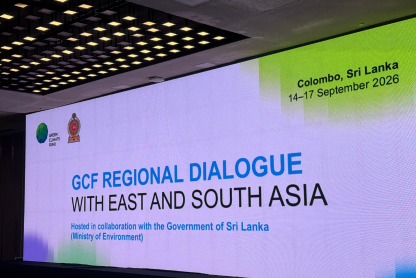
The Green Climate Fund (GCF) Regional Dialogue with East and South Asia was held in Colombo, Sri Lanka, from 14–17 September 2026, bringing together National Designated Authorities (NDAs), Accredited Entities (AEs), Delivery Partners (DPs), and other climate finance stakeholders from across the region.
The four-day dialogue provided an important platform for countries to exchange experiences, strengthen regional collaboration, and explore practical pathways to scale up climate finance in response to growing climate risks.
The dialogue came at a critical time for the region, where countries are experiencing increasing climate-induced disasters and growing demands for adaptation and mitigation finance. Discussions therefore went beyond sharing experiences to focus on strengthening country ownership, developing investment-ready climate programmes and improving the systems and capacities required to translate national climate priorities into effective investments.
The Royal Society for Protection of Nature (RSPN) participated in the dialogue as Bhutan’s GCF Delivery Partner, represented by its Research Officer and Finance Officer. RSPN’s participation was particularly relevant given its growing role in supporting Bhutan’s climate finance readiness. RSPN became Bhutan’s first Civil Society Organization to receive GCF Delivery Partner status in 2023 and implemented the GCF Readiness Project BTN-RS-006-’Strengthening Capacities and Enhancing Climate Data and Services in Bhutan to Scale-up Climate Financing from Multiple Sources’. The project helped to strengthen institutional and technical capacity, improve access to credible climate information and data, enhance stakeholder coordination and support Bhutan’s efforts to access and effectively utilize climate finance.
A major focus of the dialogue was the evolution of the GCF programme such as Readiness and Preparatory Support Programme, streamlining of accreditation process, and significance of considering social safeguards in project design and implementation. For instance, the readiness programme has moved from a predominantly annual grant-based approach towards a more programmatic, four-year framework designed to improve predictability, efficiency, country ownership and direct access to climate finance. The new approach places greater emphasis on building lasting institutional capacity rather than supporting isolated activities. Readiness support is intended to strengthen National Designated Authorities and Direct Access Entities, improve strategic frameworks and climate investment planning, develop stronger project pipelines, enhance implementation and monitoring systems, and promote knowledge-sharing and South-South cooperation. The approach is closely linked to countries’ Nationally Determined Contributions (NDCs), National Adaptation Plans (NAPs), Long-Term Strategies (LTS) and other national climate priorities.
For Bhutan, these priorities closely complement the work being undertaken through past Readiness projects. Through BTN-RS-006, RSPN has been working with national institutions and other stakeholders to strengthen capacities for climate finance planning, programming and implementation. The project also supports broader stakeholder engagement and knowledge-sharing, helping create an enabling environment for more coordinated and effective access to international climate finance. The dialogue also highlighted the importance of translating readiness investments into tangible results. Experiences from countries such as Sri Lanka and Mongolia demonstrated how readiness support can contribute to strategic policy development, including National Adaptation Plans and carbon market preparedness. Discussions also explored the emerging concept of national climate finance platforms, which can help countries coordinate grants, concessional finance, private capital, and other financial flows around common national priorities.
Another major theme was the need to strengthen the connection between national climate priorities and investment-ready programmes. Participants explored how countries and Accredited Entities can develop stronger concept notes and funding proposals by clearly articulating climate rationale, vulnerability, additionality, investment needs and expected development outcomes.
The dialogue emphasized that successful climate finance proposals require more than technically sound project ideas. They must demonstrate clear alignment with national priorities, strong institutional ownership, appropriate financial structures and measurable climate and socio-economic results. Sessions on understanding climate risks highlighted the importance of using robust evidence and climate data to demonstrate how hazards translate into risks for ecosystems, communities, infrastructure and livelihoods.
The discussions were particularly relevant to Bhutan, where strengthening climate data and analytical capacity is essential for developing credible, evidence-based climate investments.
The dialogue also examined the growing importance of private sector participation in climate action. With public resources alone insufficient to address the scale of the climate finance gap, participants discussed how concessional finance, guarantees, risk-sharing instruments and other GCF financial tools can help reduce investment barriers and mobilize domestic and international private capital.
Examples from Pakistan, Bangladesh and Mongolia demonstrated how GCF-supported interventions can help financial institutions enter emerging climate investment markets, including renewable energy and climate-resilient enterprises. Parallel technical sessions explored investment opportunities in areas such as integrated circular waste management and people-centred early warning systems.
These discussions reinforced the importance of developing climate programmes that can attract different sources of finance while responding to national development priorities.
Country ownership and direct access were recurring themes throughout the dialogue. The revised GCF approaches seek to strengthen the role of national institutions throughout the project cycle, from identifying priorities and developing concepts to implementation, monitoring and learning.
The dialogue also presented developments in the GCF accreditation framework, including efforts to streamline the accreditation process for Direct Access Entities and strengthen their programming and implementation capacities. For Bhutan, strengthening national institutions and potential Direct Access Entities remains important for increasing the country’s ability to access and manage climate finance directly.
This is also an important dimension of RSPN’s engagement with the GCF. In addition to its role as a Delivery Partner, RSPN has been building institutional systems and technical capacities relevant to future direct access and climate finance programming.
Knowledge exchange was another important component of the dialogue. Participants shared experiences from across East and South Asia on climate adaptation, mitigation, project development, financial structuring and institutional strengthening. The exchange provided an opportunity to learn from both successful initiatives and implementation challenges, including delays in project preparation, implementation and project extensions.
The final day of the dialogue focused on the future direction of the GCF, including discussions related to the Updated Strategic Plan 2028–2031 and the evolving needs of developing countries. Particular attention was given to improving accessibility for Least Developed Countries and ensuring that climate finance responds more effectively to diverse national and sub-regional vulnerabilities.
The Pitch Clinics provided a practical bridge between strategic discussions and project development. NDAs and Accredited Entities received technical feedback on proposed investments, helping identify areas for strengthening concept notes and developing them towards full funding proposals. Bhutan presented three potential projects during these sessions, providing an opportunity to obtain expert feedback and explore potential partnerships and financing pathways.
The Colombo Regional Dialogue demonstrated that the effectiveness of climate finance depends not only on the availability of resources, but also on the strength of national institutions, quality of climate information, strategic coordination and the ability to translate priorities into credible investment programmes. For Bhutan, the experience reinforces the importance of continued investment in climate finance readiness and institutional capacity.
As Bhutan continues to advance its climate priorities under the NDC, NAP and other national frameworks, the partnership between national institutions, the GCF and organizations such as RSPN will remain important in strengthening the country’s ability to access, programme and effectively utilize climate finance. RSPN’s experience as a GCF Delivery Partner and its implementation of BTN-RS-006 provide a practical platform for contributing to this broader national effort.
The Colombo Dialogue therefore served not only as a regional forum for exchange, but also as an opportunity to reflect on how Bhutan can further strengthen its climate finance architecture, build stronger investment pipelines and convert readiness and capacity-building investments into tangible climate action on the ground.