༄༅། ། རྒྱལ་འཛིན་རང་བཞིན་སྲུང་སྐྱོབ་ཚོགས་སྡེ།
Royal Society For Protection of Nature
Inspiring personal responsibility for environmental conservation since 1987
༄༅། ། རྒྱལ་འཛིན་རང་བཞིན་སྲུང་སྐྱོབ་ཚོགས་སྡེ།
Inspiring personal responsibility for environmental conservation since 1987
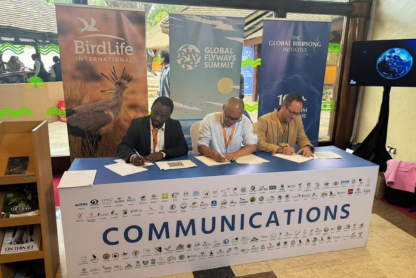
The Royal Society for Protection of Nature (RSPN) participated in the BirdLife International Global Partnership Meeting and Global Flyways Summit, held in Nairobi, Kenya, from 7–11 September 2026. The events brought together BirdLife Partners, conservation organisations, governments, scientists, development partners, and other stakeholders from across the world to exchange knowledge and strengthen collective action for the conservation of birds and their habitats.
The Global Partnership Meeting and Global Flyways Summit were hosted by BirdLife International, in collaboration with its local Partner, Nature Kenya, at the Safari Park Hotel in Nairobi. The gathering brought together more than 125 BirdLife Partners representing countries and territories across the global BirdLife Partnership.
RSPN participated in the events as part of the wider BirdLife Partnership, contributing to discussions on migratory bird conservation, community-based conservation, ecosystem restoration, climate and conservation finance, and the protection of critical habitats.
A key outcome of the Global Flyways Summit was the Nairobi Flyways Declaration, which called for coordinated action to conserve migratory birds across their breeding, stopover, and wintering grounds. Migratory birds cross national and regional boundaries throughout their annual journeys, making their conservation dependent on cooperation among countries and stakeholders along interconnected flyways. The Declaration therefore emphasised the need for stronger collaboration, coordinated conservation measures, and protection of important habitats throughout the full migratory cycle.
The call for greater cooperation comes amid increasing concern over the conservation status of migratory birds. According to BirdLife International, 45 percent of migratory bird species are declining, while approximately one in nine migratory bird species is threatened with extinction.
For Bhutan, the Nairobi Flyways Declaration has particular relevance given the country’s role as an important habitat for several migratory bird species. It also reinforces RSPN’s long standing work on the conservation of migratory birds and the landscapes on which they depend.
Since its establishment, RSPN has been working to promote the conservation of Bhutan’s important bird species and their habitats, including the Black-necked Crane, a Near Threatened migratory species that visits Bhutan during the winter months. The species depends on suitable high-altitude wetlands and surrounding landscapes for feeding, roosting, and other aspects of its seasonal cycle. Effective conservation therefore requires close collaboration among local communities, government agencies, conservation organisations, and partners across the species’ wider migratory range.Participation in the Nairobi Flyways Summit provided an opportunity for RSPN to engage with international partners and exchange experiences on approaches to migratory bird conservation. It also provided a platform to share Bhutan’s conservation experiences and learn from initiatives being implemented across different flyways.
By joining the Nairobi Flyways Declaration, RSPN reaffirmed its commitment to science-based conservation, protection of critical habitats, community engagement, and international cooperation for the conservation of migratory birds.
The Global Partnership Meeting provided a broader platform for BirdLife Partners to share experiences, lessons, and approaches to some of the key challenges and opportunities facing conservation.
Discussions covered a wide range of themes, including community-led conservation, ecosystem restoration, conservation finance, rangeland management, island conservation, the High Seas Treaty, artificial intelligence, and approaches to strengthening the conservation sector.
The exchange of experiences highlighted the importance of learning from conservation initiatives across different countries and ecological contexts. Partners shared both successes and challenges, providing opportunities to identify approaches that could be adapted to different national and regional settings.
For RSPN, participation in these discussions provided an opportunity to strengthen professional networks, exchange knowledge with BirdLife Partners, and explore opportunities for collaboration on shared conservation priorities.
The Global Partnership Meeting also provided an opportunity for BirdLife Partners to review the Partnership’s global strategy and discuss priorities for the future of conservation.
The meeting brought together representatives from across the Partnership, creating a platform for Partners to share conservation achievements, challenges, and emerging opportunities. Discussions also highlighted the importance of collective action in addressing increasingly interconnected environmental challenges.The gathering demonstrated the value of the BirdLife Partnership as a global network through which conservation organisations can share knowledge, mobilise resources, and work collectively to address threats to birds, biodiversity, and ecosystems.
The Nairobi meetings reinforced that migratory bird conservation cannot be achieved through isolated efforts. The movement of birds across borders connects ecosystems, communities, and countries along entire flyways, requiring conservation actions that extend beyond individual sites and national boundaries. For Bhutan, this global perspective is particularly important for species such as the Black-necked Crane, whose annual migration connects Bhutan with landscapes across the wider Himalayan and East Asian region.
RSPN’s participation in the Global Partnership Meeting and Global Flyways Summit provided an opportunity to connect Bhutan’s conservation priorities with wider international efforts, while also bringing lessons and experiences from the global conservation community back to the national context.
The Nairobi Flyways Declaration and the discussions held during the meetings reaffirmed the importance of coordinated action, knowledge-sharing, science-based decision-making, and partnerships in safeguarding migratory birds and the habitats they depend on. Through its continued engagement with the BirdLife Partnership and its conservation programmes in Bhutan, RSPN remains committed to contributing to national, regional, and global efforts to protect migratory birds and the ecosystems that sustain them.