༄༅། ། རྒྱལ་འཛིན་རང་བཞིན་སྲུང་སྐྱོབ་ཚོགས་སྡེ།
Royal Society For Protection of Nature
Inspiring personal responsibility for environmental conservation since 1987
༄༅། ། རྒྱལ་འཛིན་རང་བཞིན་སྲུང་སྐྱོབ་ཚོགས་སྡེ།
Inspiring personal responsibility for environmental conservation since 1987
RSPN Bhutan successfully conducted a Project Consultation Meeting with officials of Trongsa Dzongkhag Administration
and Dragteng Gewog, followed by the signing of a Project Financing Agreement for the Integrated Water Resource Management and Livelihood Enhancement Project in Drakteng Gewog, Trongsa. The project is funded by the UNDP Global Environment Facility (GEF)-Small Grants Programme (SGP) under Operational Phase 8.
The consultation meeting brought together partners to align on key interventions aimed at restoring degraded ecosystems, improving community livelihoods, and strengthening climate resilience in the region.
A joint field visit led by Dasho Dzongrab was then carried out in Samcholing, where the team assessed three adjoining degraded lakes at Dramitang and identified priority restoration actions,
including:
 Clearing overgrown vegetation in lake catchments.
 Planting native tree species along lake peripheries to restore biodiversity.
 Constructing rainwater harvesting ponds to enhance groundwater recharge.
 Developing inlet channels to improve water retention.
 Establishing water storage and distribution networks for safe and reliable drinking water supply.
These nature-based solutions are expected to enhance local water security, restore fragile ecosystems, and strengthen community resilience to climate change impacts.
The consultation and field visit reaffirmed the strong partnership between RSPN, Trongsa Dzongkhag, Dragteng Gewog, and local communities in advancing practical, nature-based solutions for sustainable development.
𝗦𝗮𝗳𝗲 𝗱𝗿𝗶𝗻𝗸𝗶𝗻𝗴 𝘄𝗮𝘁𝗲𝗿 doesn’t end at the tap. It depends on the people who keep the system running and in communities across the White-bellied Heron landscape, those people now have a name and a skill set to match.
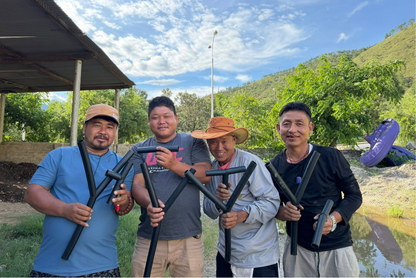
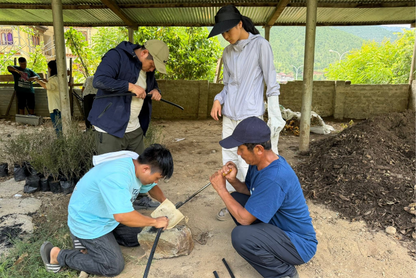
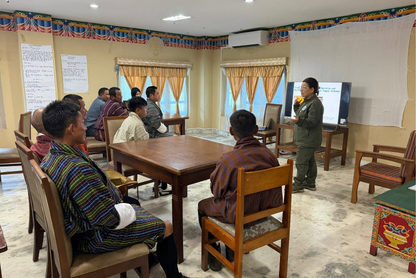
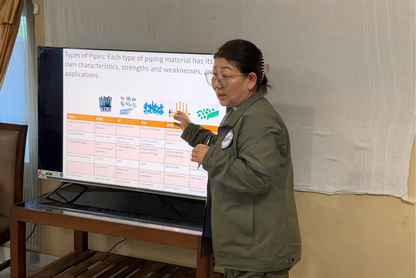
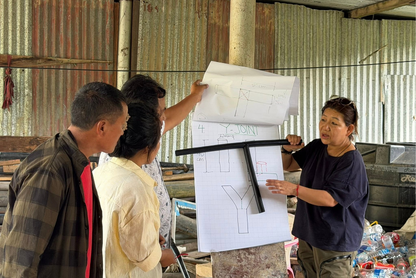
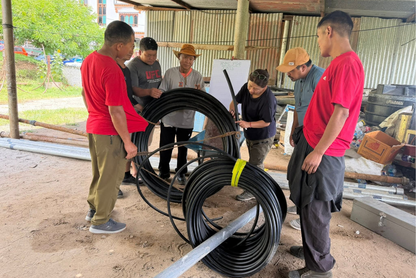
RSPN, in partnership with the Local Government and the Water and Sanitation Division (WSD) under the Ministry of Infrastructure and Transport, is currently organizing a Water System Operation and Maintenance Training for 22 community water caretakers locally known as 𝘾𝙝𝙪 𝙏𝙨𝙪𝙥 and community representatives. The training follows the successful rollout of 15 Rural Water Supply Schemes supported across the WBH landscape.
The Chu Tsup are more than technicians. As the guardians of their community water systems, they respond to system failures,water source management, monitor water quality, and ensure that households have uninterrupted flow of clean water. The training is designed to deepen these capabilities with structured and practical knowledge.
By investing in the people behind the pipes, RSPN is strengthening a conservation approach that recognizes the link between clean water, healthy communities, and a thriving White-bellied Heron landscape. At the heart of this effort are the Chu Tsup, whose dedication keeps both communities and conservation flowing.
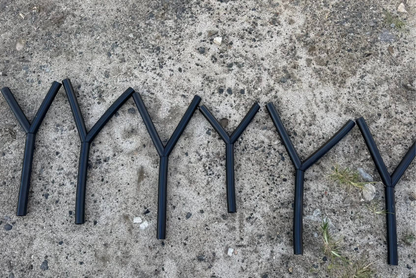
A joint team from RSPN Bhutan and Thedtsho Gewog carried out the monitoring of #RWSS in Wangdue Phodrang District on March 6th, 2024. Currently, RSPN through the ongoing BMUV-IKI project is supporting two RWSS (Matalungchu and Wangjokha Chiwog, under Thedtsho Gewog).
The RWSS is expected to benefit 95 households. During the monitoring, local government officials provided updates on the progress of RWSS work at Matalungchu, while discussions on Wangjokha RWSS aimed at ensuring smooth implementation .This effort is part of a larger RWSS activity supporting 13 schemes across the White-bellied Heron Landscape, spanning Punakha, Wangdue Phodrang, Tsirang, Trongsa, and Zhemgang Districts.
We extend our gratitude to the Dzongkhag Administration of Wangduephodrang and Thedtsho Gewog Administration for their invaluable support and coordination, which is crucial for the success of this endeavor.
This project is funded by the Federal Ministry for the Environment, Nature Conservation, Nuclear Safety and Consumer Protection (BMUV), Germany through International Climate Initiative (IKI) with co-funding from MAVA Foundation, Switzerland and the Royal Society for Protection of Nature (RSPN).


Dechheling Gewog located under Pema Gatshel Dzongkhag is characterized by low-lying hills and a cluster of houses spread across the slopes and hilltops. Peling-Tso, a marsh lake, located at the valley bottom at 950m covers an approximate area of 34.219 hectares (85.547 acres) and is the source for Peling-chhu, which is the only perennial stream in the area. The stream, an outlet of Peling-Tsho/wetland is used by more than 200 households for drinking, washing, and feeding domestic animals. However, Peling-Tsho catchment has been declining over the years due to siltation, and access to sufficient and clean drinking water is a major problem in Dechheling Gewog mainly attributed to the loss of forest cover and watersheds. Rainwater is the main source of Peling-Tsho wetland and for drinking; thus, it is very important to trap rainwater for recharging of Peling-Tsho wetland and nearby springs.
As part of improving the restoration and protection of Peling-Tso for sustaining wetland ecosystem services (water and biodiversity), the Royal Society for Protection of Nature (RSPN) and Dechheling Gewog with technical backstopping by the RGoB through GEF-Small Grants Program of UNDP Bhutan Program Office funding constructed the 34 water collection ponds/trenches (61cm depth by 1m square) 5 numbers of Zabo systems (15m by 5m by 50cm) around Peling-Tsho catchment to recharge rainwater during the monsoon. In addition, the project also supported 86 Sintex Tanks (500 liters) and installed Roof-top Rainwater Harvesting Systems by 86 households under Gonpawong Chiwog. The establishment of water collection ponds/trenches, Zabo systems, and Roof-top Rainwater Harvesting Systems has helped in recharging groundwater and overcoming water shortages for household use and agriculture.